
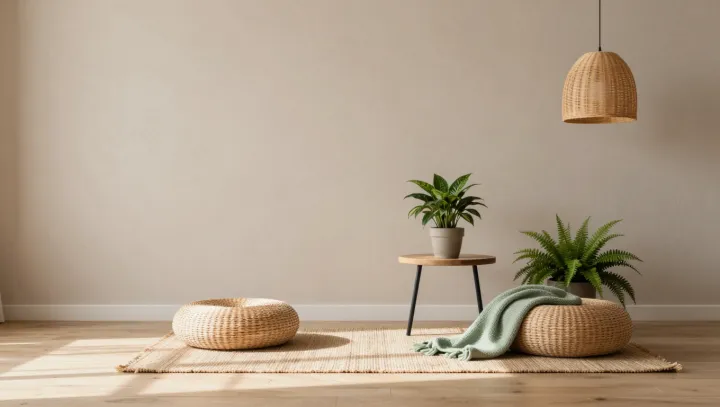
A bare corner is not neutral; it is visually hostile in slow motion. Flat walls, hard shadows, and a single overhead fixture create high contrast edges that force the visual cortex into constant edge detection and figure–ground sorting, a process tied to primary visual processing and attentional control networks.
So the modest claim from environmental psychology is bolder than it sounds. Two small plants introduce low-frequency visual patterns—branching stems and leaf veins—that the brain’s ventral stream can process with less effort, because fractal geometry in that range aligns with existing perceptual templates and reduces saccadic eye movements across the field. A soft lamp, set below eye level, smooths luminance gradients and cuts the harsh peak in luminance contrast that drives micro-corrections in pupil dilation and autonomic arousal.
What feels like decor is closer to a tiny cognitive ergonomics experiment. Studies on biophilic design and attentional restoration report measurable drops in perceived mental fatigue and heart rate variability shifts when natural cues and diffuse light replace blank, high-contrast planes. The floor area stays identical, the furniture unmoved, yet the neural workload of just looking around falls, and the corner stops shouting at the eye.