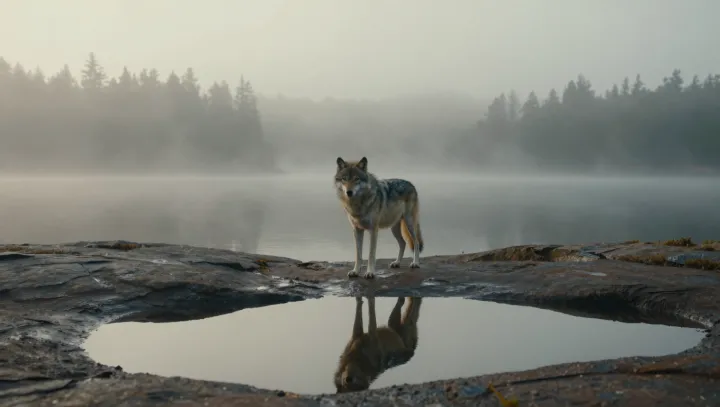

Stillness is lying. At the first thin stripe of light over a mountain marsh, temperature gradients steepen, vapor thickens near the surface, and invisible eddies begin to shear through the cold air above the water, even as the scene to a lone boatman appears almost frozen.
The real drama starts early. As light crosses a biochemical threshold, wetland plants ramp up photosynthesis, pulling carbon dioxide from pore water while driving stomatal conductance that releases water vapor and oxygen, so surface gas concentrations swing faster than any boat can drift across the bay.
More intense still is the underground work. Microbes in saturated peat accelerate aerobic and anaerobic respiration as temperature and oxygen at the sediment–air interface change by fractions of a degree, shifting fluxes of methane and nitrous oxide through a matrix of roots and bubbles that never disturb the mirror of the water.
What looks static from the hull is a fluid experiment. Atmospheric boundary layer turbulence, latent heat flux, and sensible heat flux couple the marsh to the overlying air, turning that first quiet glow into the day’s steepest rebalancing of energy and gases between soil, water, plants and sky.