
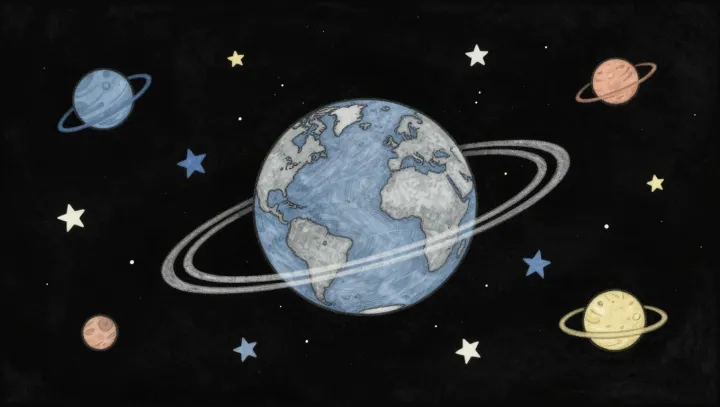
The Flat-Dome Illusion of Night
The night sky appears flat because human vision reads distant light as angular projection, masking distances that range from nearby stars to remote galaxies.
2026-09-29

Why 10,000-Year Events Can Repeat
A 10,000-year event describes annual probability, not a schedule. Rare events can occur close together because return periods are statistical averages, not waiting-time guarantees.
2026-09-29
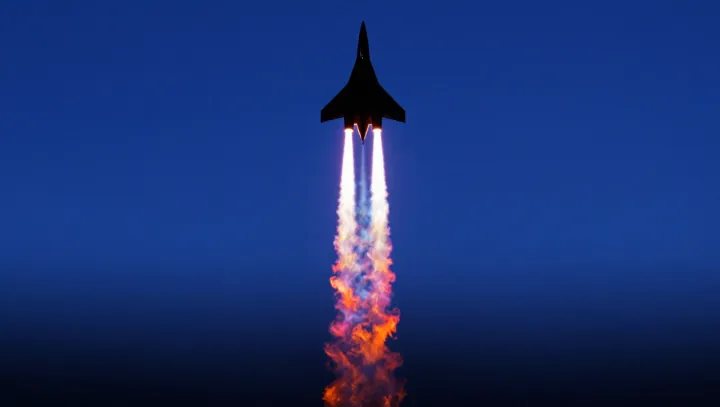
Fog Does Not Part for Sunbeams
Foggy shafts are visible because suspended water droplets scatter sunlight toward the eye. Mie scattering, extinction, contrast, and viewing geometry shape the effect.
2026-09-28
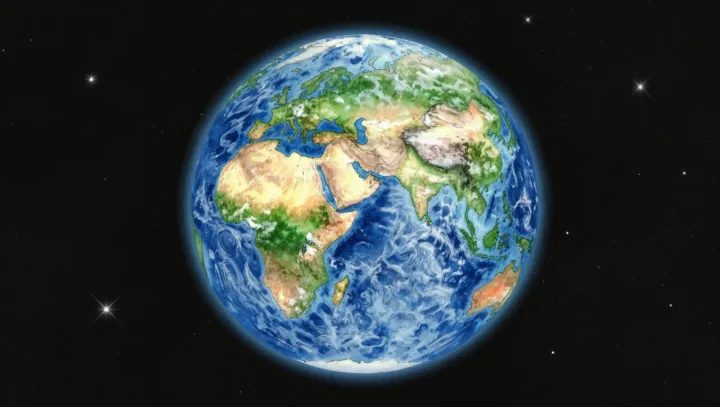
Earth's Blue Is a Thin Atmospheric Trick
Earth's blue appearance comes chiefly from Rayleigh scattering in an atmosphere extremely thin beside the planet, not from oceans alone.
2026-09-28
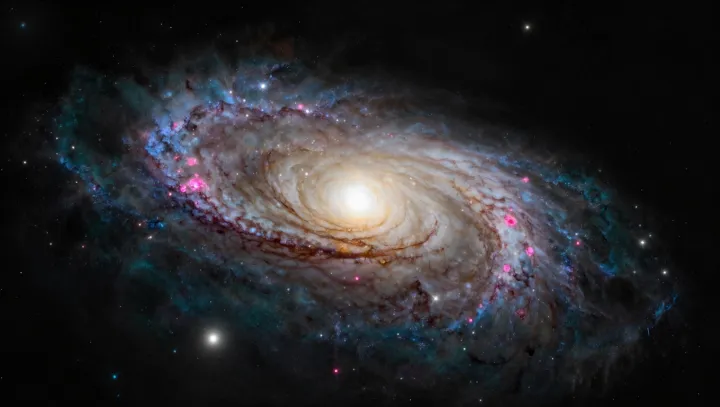
Arecibo's Binary Postcard
The Arecibo Message was a 1,679-bit binary display aimed at a distant star cluster, built to demonstrate mathematical decoding rather than start a conversation.
2026-09-27
Why ISS Crews Keep One Earth Sleep Clock
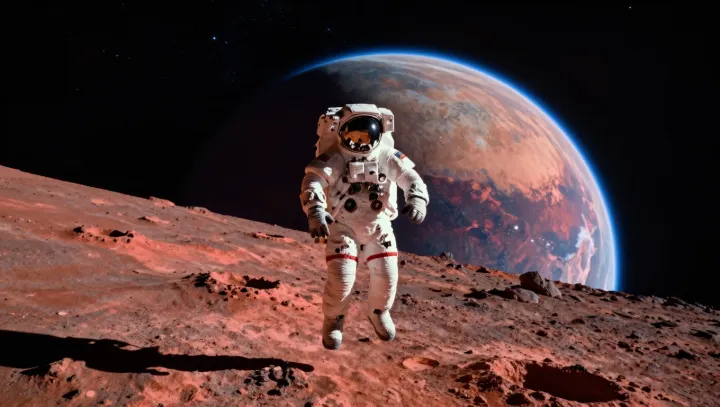
ISS crews witness about sixteen sunrises each day, but circadian biology requires a steady 24-hour routine to protect sleep, judgment, mood, and mission performance.
2026-09-24
The Geometry That Let DNA Copy
DNA's double helix exposed a physical rule for heredity: complementary base pairing lets each strand direct construction of its partner during replication.
2026-09-24
Why Mars Sunsets Turn Blue Near the Sun
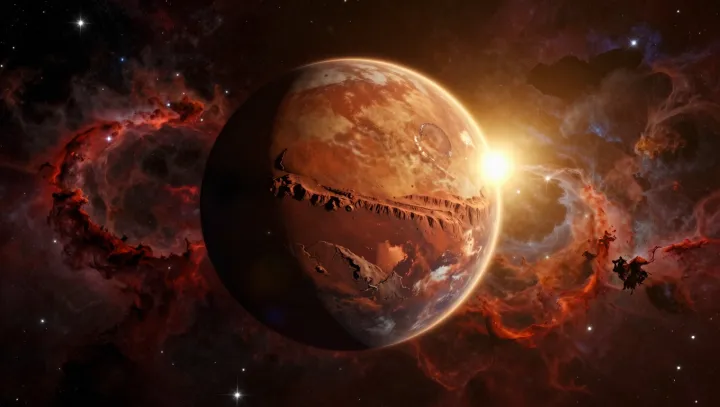
Fine mineral dust in Mars's atmosphere selectively removes warmer wavelengths from the sunset beam, leaving a blue halo near the Sun.
2026-09-24
Why Every Galaxy Seems Central
Cosmic expansion has no center inside the universe. Because space itself stretches, observers in any galaxy see distant galaxies receding faster with distance.
2026-09-23
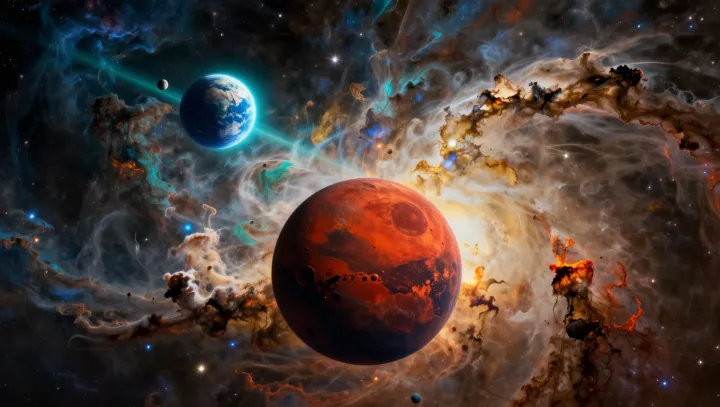
How Mars Lost Its Thick Air
Mars likely lost much of its once thicker air through low gravity, solar radiation, solar wind stripping, and mineral storage, ending conditions that supported surface water.
2026-09-23
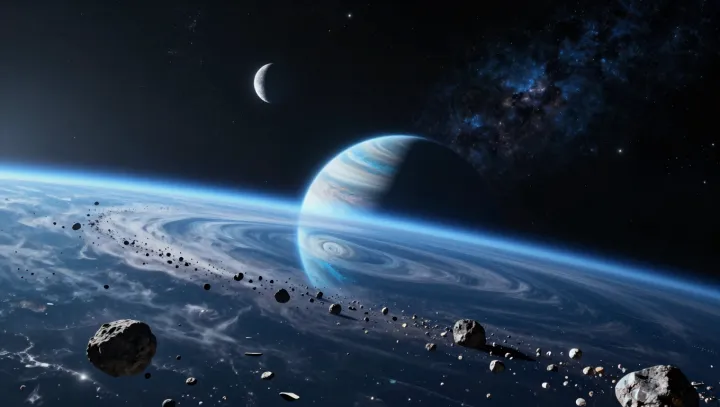
Blue Skies and Empty Asteroid Fields
Atmospheric scattering can make a planet appear blue, while asteroid fields that look crowded often contain enormous distances between individual rocks.
2026-09-22
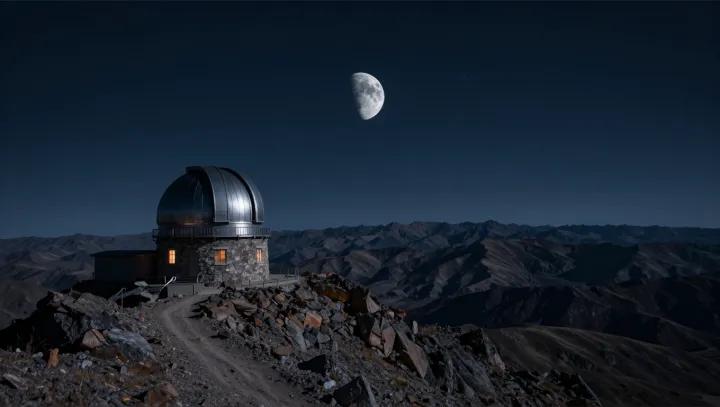
A Crescent Moon, Ancient Light
A crescent Moon can seem within reach, while an observatory below measures photons shaped by distance, redshift, and millions of years of travel.
2026-09-22

Stone Spires, Moving Time
Rock spires appear fixed, but abrasion, runoff, freeze-thaw weathering, and uneven erosion reshape them grain by grain.
2026-09-21
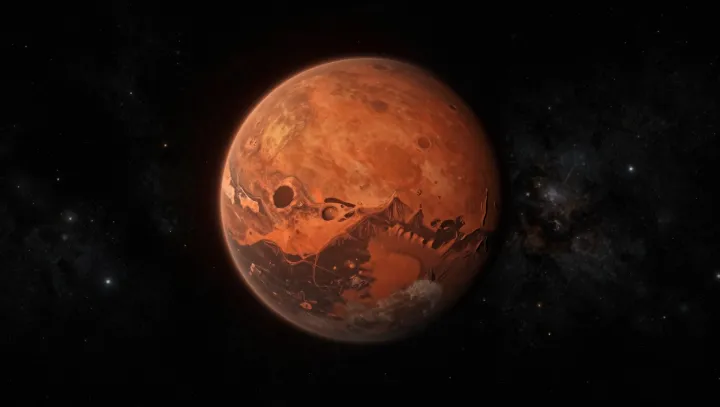
Mars Keeps a Record of Rupture
Mars appears quiet from orbit, but Valles Marineris and impact craters expose a crust shaped by extension, collisions, erosion, burial, and collapse.
2026-09-21

Under Starlight, Instruments Rule
Coastal rescue helicopters depend on instrument procedures, trained crews, avionics, and engineered helipad lighting when darkness makes the sky visually useless.
2026-09-21

Why the Sea Looks Gold
Low sunlight, atmospheric scattering, and shifting reflective surfaces make wavelets and wet sand appear gold. The color is borrowed light, not a change in the ocean.
2026-09-18
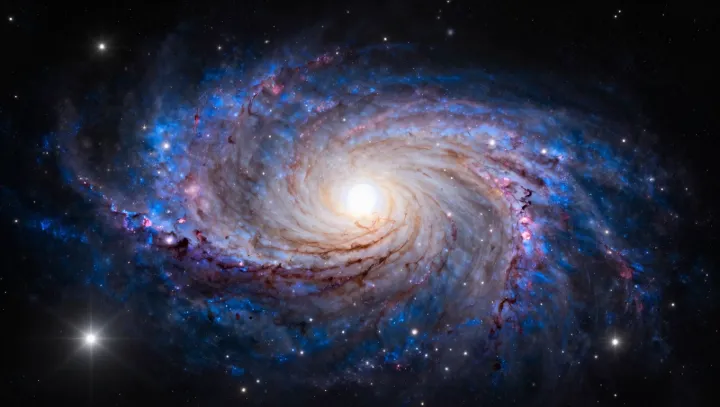
Blue Arms, Old Stars, Dark Core
Blue spiral arms mark active star formation, while a galaxy's bright center can be lit by dense populations of older stars or matter falling toward a supermassive black hole.
2026-09-18
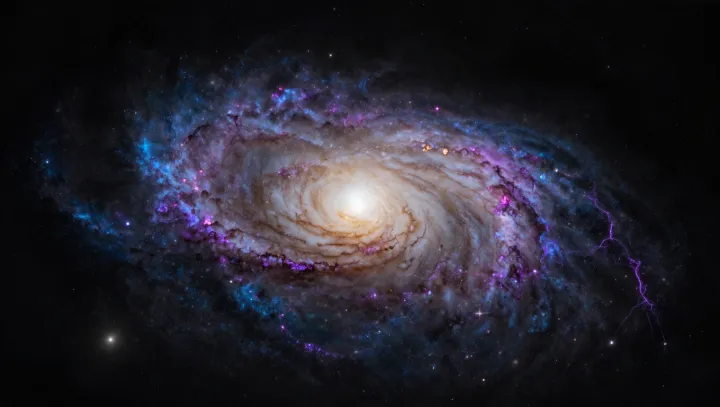
Pink Clouds, Blue Spiral Arms
Pink H-alpha clouds expose ionized stellar nurseries, while blue spiral arms reveal where massive, short-lived stars still control the visible light.
2026-09-18
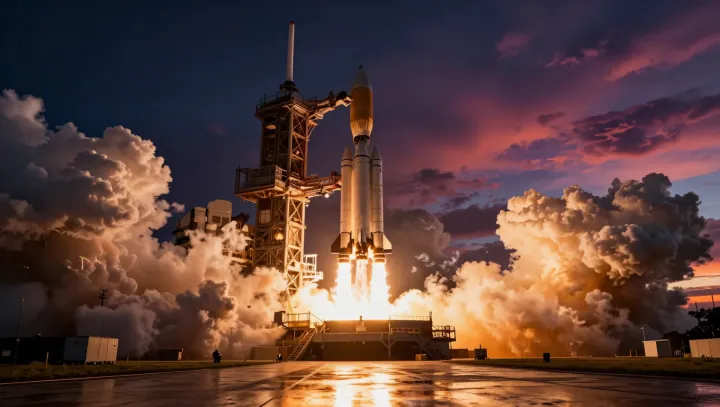
The Price of Leaving Earth
A Saturn V-class rocket needed immense propellant flow at liftoff to exceed its own weight, limit gravity losses, and begin building the velocity required for orbit.
2026-09-18
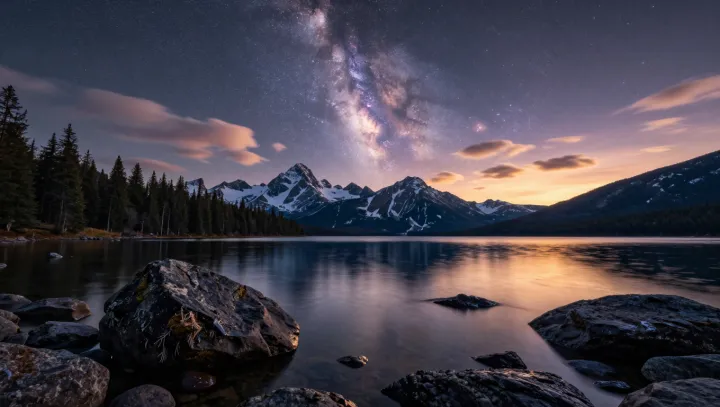
The Milky Way Needs Darkness
Artificial skyglow hides the Milky Way by reducing contrast; darker, better-aimed lighting lets human vision and the galaxy reappear.
2026-09-18