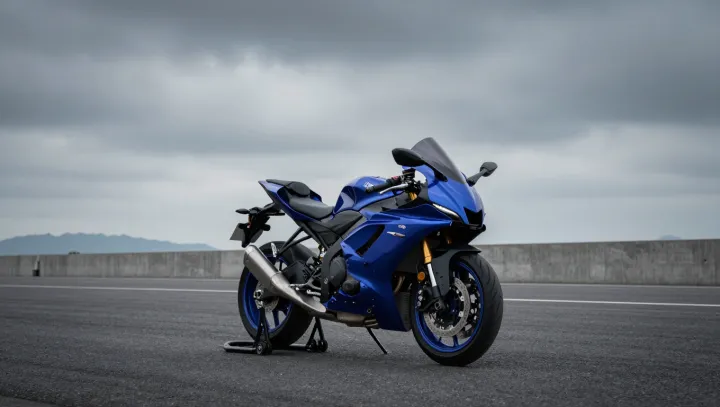
A middleweight supersport should not outpace bigger, stronger machines, yet the Yamaha R6 often does on tight circuits. Its story is not about headline power; it is about stripping everything that slows a lap. Mass went down, frontal area shrank, and the bike started to feel less like a street product and more like a homologated tool.
The real advantage sits in physics, not mystique. Lower weight cuts rotational inertia in the crankshaft and wheels, so the engine spins up faster and the chassis changes direction with less input from the rider. Short, light bursts of throttle matter more than peak horsepower on a spec sheet, especially when every transition between corner entries and exits punishes excess bulk.
Equally decisive is the bodywork. Refined fairing shapes trim drag coefficient and calm turbulent airflow around the rider, which stabilizes the bike under hard braking and during midcorner lean. That stability lets skilled riders brake later, carry higher corner speed, and use less lean angle for the same radius, a compound gain that heavier, more powerful bikes struggle to match.
Underneath, a stiff yet forgiving frame and precise rake and trail numbers complete the package. The chassis communicates grip limits clearly, so racers can exploit traction and slide control electronics with confidence rather than caution. Where another bike forces compromise between speed and survival, the R6 invites the rider to keep the throttle open a fraction longer, and that tiny invitation is where lap records quietly change hands.