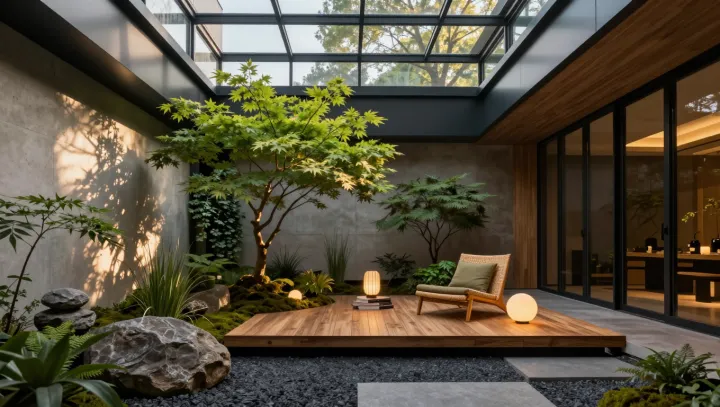

Sunlight pools on stone. Yet the court may be the palace's sharpest cooling device, because high walls and shaded arcades cut direct solar gain before it reaches rooms. The void matters. As air in the court warms and rises, it draws replacement air through doors, screens, and low openings.
Timing is the trick. Thick masonry absorbs heat slowly, a behavior called thermal mass, while deep overhangs lower radiant heat in chambers beside the court. Heat arrives later. The delay shifts peak indoor heat toward the cooler part of the daily cycle, instead of forcing rooms to absorb noon's full load at once. Night resets the system. Cooler air can cross the court and move through interior openings; convective airflow, aided by the stack effect as warm air rises, exports stored heat. Exposed surfaces shed warmth to the sky, and thermal lag gives occupants relief when it matters most.
The plan earns its space. Rooms facing the court gain shaded frontage, cross-ventilation, and a route to cooler night air, though an unshaded stone floor can collect fierce daytime heat. That trade is honest. Courtyards also reduce reliance on sun-struck exterior openings, allowing thicker perimeter rooms to resist heat gain. Water, planting, and damp surfaces can add evaporative cooling where they exist, but the court's basic performance rests on shade, airflow, and masonry. At dusk, it looks empty. Still, heat is leaving.