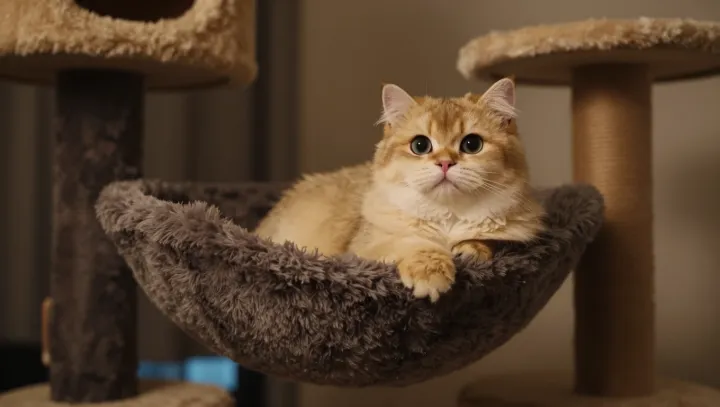
The hammock gets too much credit. Its slow arc can look soothing, yet for a cat whose body reads each shift through the vestibular system, motion is not automatically rest; a firm perch lets muscles release without repeated balance corrections. Its loose weave also changes angle under weight, giving paws less predictable purchase than a broad, fixed platform. Stillness wins.
Choice matters more. Cats use proprioception, the sense of limb position, alongside vestibular input to judge whether a surface will hold; when either signal keeps changing, the animal may remain alert rather than settle. The hammock is a poor default. Like a background process consuming processor time, vestibular processing can demand small postural adjustments as fabric moves under the body. That does not make a hammock wrong. It makes preference the measurement. Let the cat decide.
Designers should reject the gimmick. A quiet shelf, enclosed bed, or stable cushion gives a cat control over contact, escape routes, and body position; placement can also affect thermoregulation when the chosen site holds warmth or avoids drafts. A cat that returns to one place is offering a usable signal, far more informative than a product promise of calm. As pet spaces gain sensors, the sharper system will read repeated choices and preserve them, turning comfort from a moving feature into a responsive habitat.