
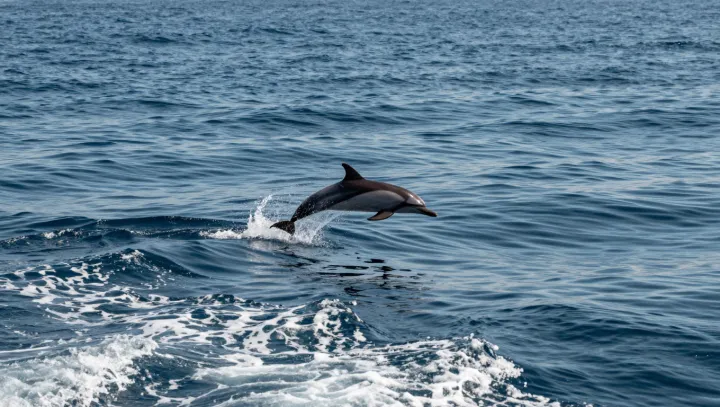
Oddly familiar is the right reaction to a dolphin’s face. Behind that curved jaw and fixed smile sits a body plan that once trotted on land, a kinship it shares with whales and with humans, written into vertebrae, limb buds, and snippets of DNA rather than in any sentimental myth.
Uncomfortable, though, is the idea that the ocean’s acrobats are not alien at all but edited versions of a small hoofed mammal. Comparative anatomy shows the same humerus, radius, and ulna inside a dolphin flipper that support a human arm, while vestigial pelvic bones float deep in the torso like punctuation marks left by hips that used to anchor hind legs. Developmental biology backs the story: early embryos briefly sketch four limb buds, then suppress the rear pair as genes such as Hox clusters and Sonic hedgehog redirect growth for a streamlined torso and tail-powered locomotion.
More unsettling is that this return to water looks less like a break than a loop. Molecular phylogenetics links dolphins and whales with artiodactyls, the group that includes modern hippos, so the sleek sonar specialist that glides past a boat carries the legacy of a creature that once sniffed the air, chewed plants on muddy banks, and pushed itself forward on four small, weight-bearing feet.